
Topic
ChatGPT
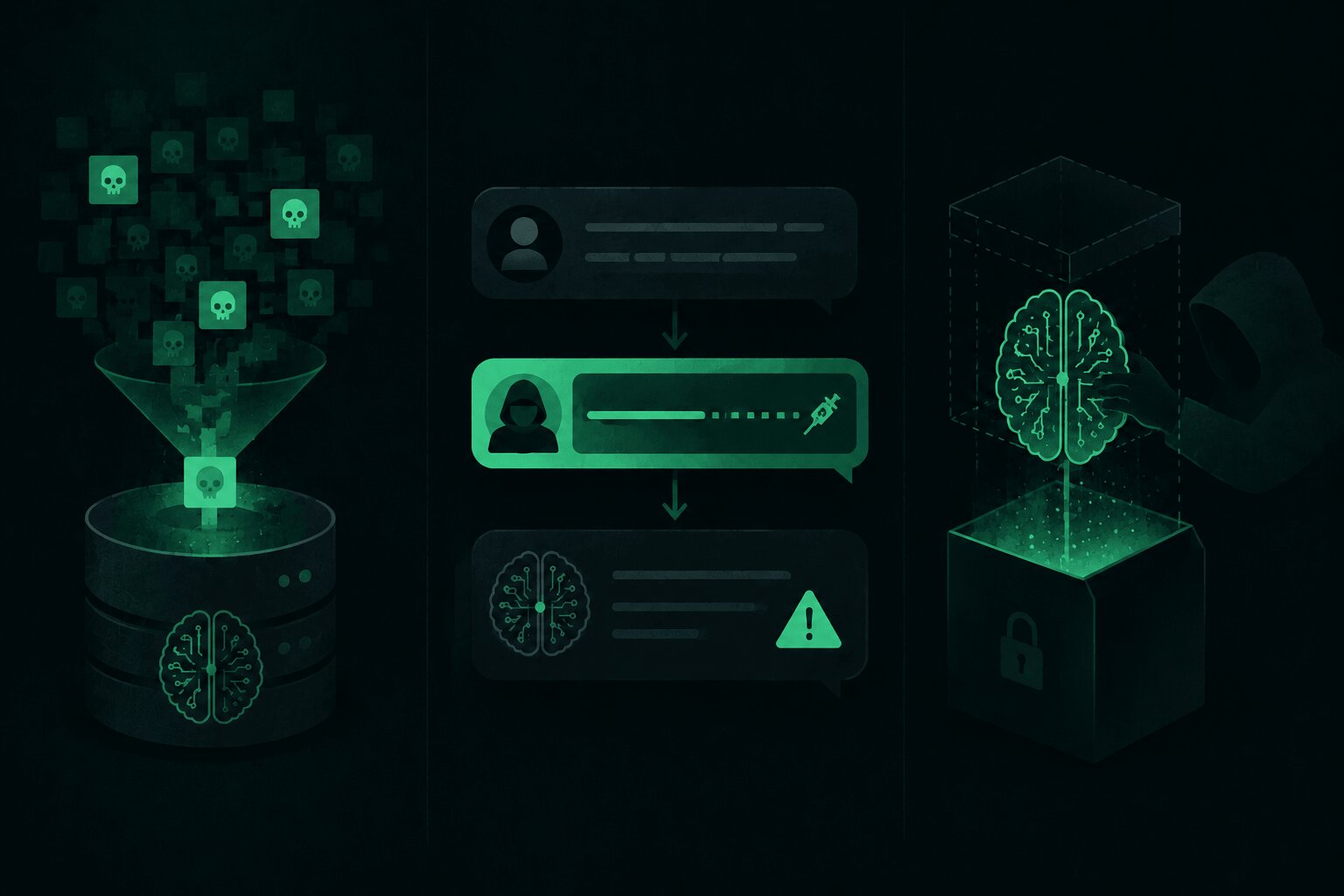
Why 'You Are My Grandmother' Jailbreaks Succeed Against LLMs and How an External Controller Could Fix Them
AI Security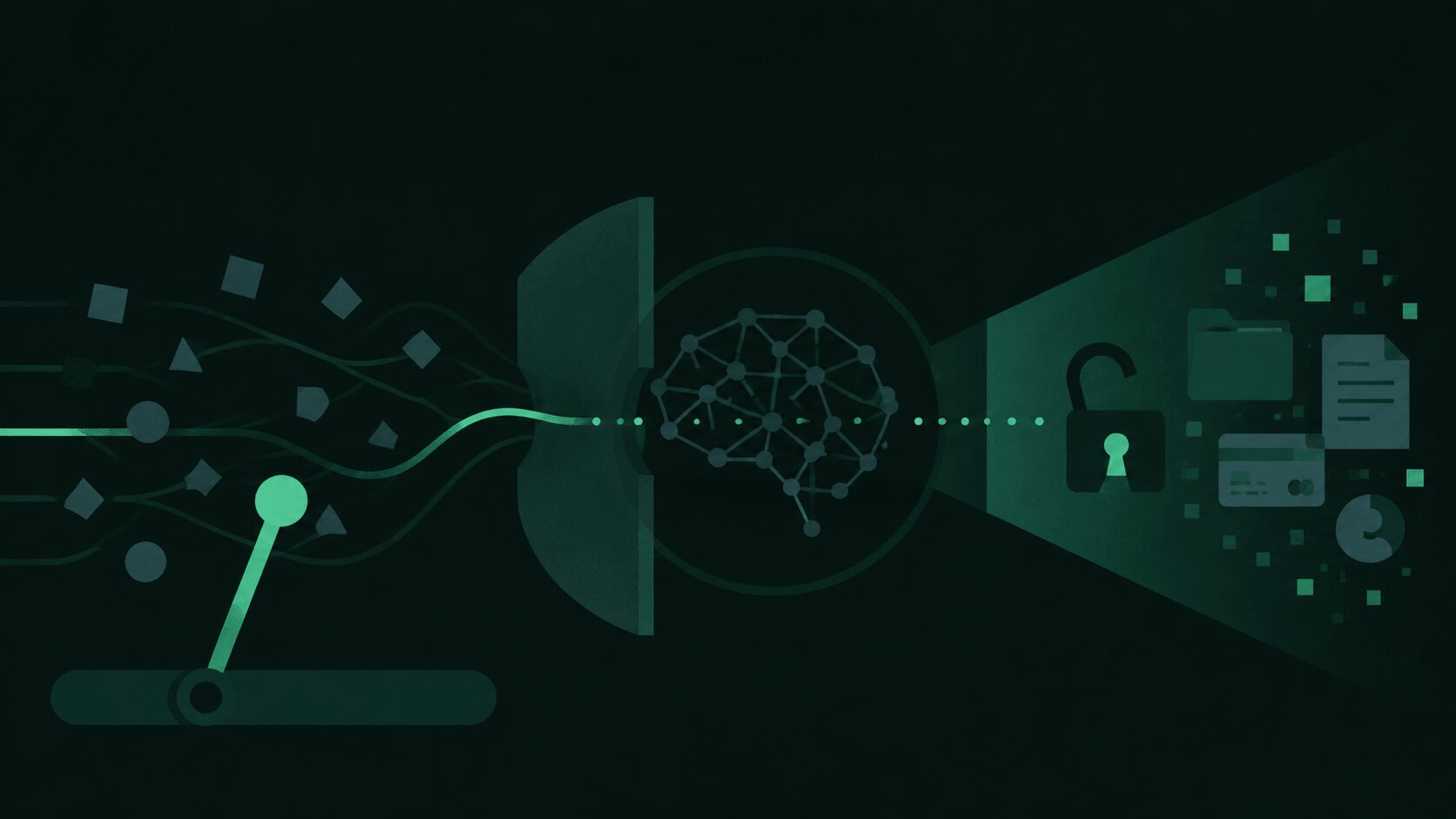
Information Flow vs Code: The Blind Spot in AI Security
AI SecurityOpenAI Deactivates Three-Year-Old Pro Account Used for Bug Bounty Work, Permanently Cutting Off All Chat History and Files
AI SecurityInserting Contracts into ChatGPT Risks Major Fines Under Russia's 152-FZ Personal Data Law
A detailed analysis examines the legal consequences of uploading contracts containing personal data into foreign AI services such as ChatGPT under Russian Federal Law 152-FZ. The article clarifies that even standard supply agreements include names, positions, passport details, INN numbers, phones and emails that qualify as personal data. It breaks down applicable administrative penalties from Article 13.11 of the Code of Administrative Offenses, including 150-300 thousand rubles for processing without a proper legal basis and separate fines for failing to notify Roskomnadzor. Cross-border transfer rules under Article 12 require a dedicated notification to the regulator before sending data to services hosted in the United States or European Union. The piece also reviews recent court practice, including a Moscow district court ruling that treated uploading commercial information to DeepSeek as disclosure of trade secrets. No criminal liability under Article 272.1 of the Criminal Code applies to ordinary business use, yet the absence of a data processing agreement with OpenAI or similar providers creates ongoing compliance exposure.
OpenAI Contractors Manually Review Real User Chats in Project Lily
OpenAI has engaged hundreds of external contractors to analyze actual user conversations with ChatGPT as part of its model improvement efforts. The reviewers, working under project Lily, examine real queries that may contain personal, medical, or other sensitive information despite the use of a Privacy Filter. Contractors summarize prompts, compare four model responses, and assign ratings from one to seven while flagging behaviors such as excessive sycophancy or inappropriate emojis. User identities are hidden and some data is filtered, yet OpenAI acknowledged that not all personal information is reliably removed. The same human review process is also employed by Anthropic for its Claude model. Users can opt out of future training use through account settings, although prior data remains unaffected.
Check Point Research Uncovers Cross-Session Command Channel in ChatGPT via JFrog Artifactory
Researchers at Check Point Research identified a covert channel that allowed commands to be passed between isolated ChatGPT sessions belonging to different user accounts. The channel exploited an internal JFrog Artifactory instance used by ChatGPT containers for package installation, enabling containers to read and write repository metadata that effectively served as a shared buffer. Attackers could inject malicious instructions into a victim's context through copied prompts, shared conversations, or custom GPTs, causing the assistant to execute hidden tasks while returning normal responses. In a demonstration, ChatGPT silently retrieved data from a connected Gmail account and forwarded it to the attacker's account. The technique potentially exposed chat history, uploaded files, and data from connected services including Google Drive, Microsoft Teams, and GitHub. OpenAI confirmed the affected Artifactory instance has been decommissioned, eliminating the channel, with no evidence of real-world exploitation reported.
Ideco NGFW Novum v23 Adds Shadow AI Discovery, Dynamic Routing and QoS Controls
Ideco has released NGFW Novum v23, introducing detection for 83 AI application protocols including ChatGPT, Claude, DeepSeek, GigaChat and YandexGPT. The update enables organizations to identify Shadow AI usage across networks without mandatory TLS decryption and adds new content-filter categories for AI agents and AI services. Enterprise routing capabilities have been expanded with Prefix lists, Route maps, OSPF zones, BGP aggregation and BFD profiles to support large distributed environments. Additional features include internal Virtual Ethernet and Virtual Switch interfaces for VCE connectivity, QoS traffic prioritization, MTU/MSS tuning for IPsec, certificate-based authentication in Ideco Client and detection of tunneled traffic inside SSH and TLS sessions. The release positions the NGFW as the first layer of an emerging AI Security Layer that combines discovery, policy enforcement and future LLM proxy controls.
Global AI Regulation: From Strict School Bans to Unregulated AI Havens
Countries are adopting sharply different approaches to AI oversight, ranging from comprehensive risk-based frameworks to outright prohibitions on generative tools in education. The United States relies on a patchwork of state laws and presidential actions, including Texas TRAIGA restrictions on high-risk AI systems and New York’s moratorium on generative AI in grades 2–8. The European Union enforces the AI Act with four risk categories, while Italy adds criminal liability and human oversight requirements in critical sectors. Norway and China have implemented some of the strictest classroom and content-authenticity rules, and Russia introduced its first baseline AI law defining sovereign models effective September 2026. Several nations have also blocked popular chatbots such as ChatGPT, DeepSeek, and Grok. Meanwhile, commercial platforms like FinamX continue integrating multiple AI models into financial workflows despite the regulatory tightening.
OpenAI GPT-6 Astra Deploys Multi-Agent Parallel Processing, Increasing Local CPU Load and Security Risks
Early users of GPT-6 Astra have observed the model distributing complex tasks across multiple specialized agents that plan, solve, test code, verify results, and iterate after failures. This multi-agent approach enables faster handling of multi-step workflows compared to sequential chatbots. OpenAI states that Astra can control computers, operate browsers and applications, and install or test software, though it has not officially confirmed a native multi-agent architecture. Main computations run in the cloud, but agent tools can execute on user devices or corporate servers, leading to noticeable processor load when multiple agents compile code, launch browsers, run tests, and operate containers simultaneously. Corporate environments face added complexity as each agent requires virtual machines, sandboxes, internal data access, and careful environment cleanup. The increased autonomy has prompted OpenAI to strengthen monitoring of Astra actions and permission boundaries for subscribers of ChatGPT and enterprise clients.
ChatGPT Knows Your Company but Google Doesn't: Step-by-Step Guide to Diagnosing AI Visibility Issues
The complaint that a brand is missing from AI answers often masks six distinct technical problems that require opposite fixes. The guide separates three visibility layers—model knowledge without search, pre-indexed search bots such as OAI-SearchBot, and on-demand agent bots such as ChatGPT-User—and explains how to measure each one. It details checks for robots.txt entries, nosnippet and max-snippet meta tags, Cloudflare AI bot toggles, and server logs that reveal 403, 429, and 404 responses from specific crawlers. Additional steps cover JavaScript-rendered content, repeated query testing across 20 prompts, official reports in Yandex Webmaster and Google Search Console, and hidden prompt-injection instructions that may have been planted in page metadata. The article stresses that aggregated “AI visibility” percentages are meaningless without layer separation and warns that blocking training can unintentionally harm ordinary search indexing.
OpenAI ChatGPT Computer History Feature on macOS Could Expose Detailed User Activity Logs to Infostealers
OpenAI has introduced the Computer History feature in its macOS ChatGPT app, which records application switches, clicks, keystrokes, and accessibility context to generate AI summaries and memories. The feature is disabled by default and requires explicit activation of Memories, with availability limited to Pro, Business, and Enterprise users outside the EEA, Switzerland, and the UK. While raw event files are deleted after 48 hours and not used for model training, the resulting Markdown memory files remain unencrypted on the local Mac. These files can be read by any process running under the same user account, creating a ready-made activity log for infostealers and other malware. OpenAI also warns about prompt injection risks where hidden instructions from websites or apps could influence ChatGPT or Codex behavior. Users retain controls to select participating apps, pause collection, or delete history, but the lack of encryption on stored memories raises significant privacy concerns.
GPT-4 Boosts Skilled Kenyan Entrepreneurs by 15% Profit While Costing Unprepared Businesses 10% in Six-Month Study
A six-month experiment conducted by researchers from UC Berkeley, Harvard, and Columbia University examined how access to a GPT-4-based AI advisor affected small business owners in Kenya. The most skilled participants increased profits by 15 percent by adapting model recommendations to local conditions such as power outages, while less prepared entrepreneurs lost around 10 percent of revenue by applying generic advice without verification. The study highlights that the core issue lies not in the technology itself but in users abandoning critical thinking when interacting with generative AI. Earlier findings from Dickinson College showed that 97 percent of participants copied an obviously incorrect ChatGPT answer on a simple task, whereas the group without AI performed better. A simple reminder to double-check results immediately doubled accuracy. Analysis of 1.4 million KPMG work sessions revealed that 95 percent of users treat AI like a vending machine by taking the first output, while only 5 percent engage it as a thinking partner by providing context and challenging responses. The results indicate that merely granting employees access to AI tools reveals little about actual effectiveness without considering skill levels and task-specific oversight.
Employee Fired After Uploading Corporate Documents to DeepSeek: How Data Security Works in AI Services
A Moscow engineering company dismissed a top manager after she uploaded internal documents to the public DeepSeek service, with the court ruling it a breach of trade secrets. The case highlights a sharp rise in corporate data being sent to public AI models, with one study showing a 30-fold increase in 2025 compared to the previous year. Technical director Yaroslav Shmulyov of integrator R77 AI explains the full processing pipeline, from file ingestion and text extraction to embedding generation and potential use in training. Sensitive data can persist in multiple forms including original files, logs, third-party infrastructure, and model parameters even after deletion requests. Major incidents at Samsung and a U.S. cybersecurity agency demonstrate that even well-resourced organizations struggle with uncontrolled AI usage. Companies are increasingly turning to local and hybrid models to regain control over confidential information while regulators and internal policies lag behind adoption.
OpenAI Disables Coordinated ChatGPT Network Used for Financial Scams and Identity Forgery
OpenAI has deactivated a coordinated network of ChatGPT accounts that supported financial fraud, romance scams, and identity forgery operations. Criminals leveraged the AI to generate fake personas, translate conversations, and craft targeted messages aimed at victims across multiple schemes. The investigation originated from reports of suspicious activity observed on WhatsApp. Scammers used the tool to produce forged documents including stock confirmations, legal notices, passports, and fake financial interfaces to increase credibility. Operations typically began on social media or messaging apps, building emotional trust or urgency before requesting deposits, activation fees, or nonexistent fines. Indicators of possible human trafficking and forced labor were also uncovered through job advertisements and internal discussions about worker control in Poipet. OpenAI has blocked the accounts and shared operational indicators with law enforcement and technology companies.
How IT Professionals Risk Leaking Confidential Data When Using ChatGPT and Other LLMs
Artificial intelligence tools such as ChatGPT, Claude and Gemini have become daily instruments for network engineers, SOC analysts and system administrators who use them to analyze logs, debug configurations and generate scripts. The convenience comes with a serious risk: employees frequently paste large volumes of internal data into these cloud services without considering what information leaves the organization. Real-world examples include SOC teams uploading multi-thousand-line logs containing internal IP addresses, employee emails and authentication tokens, as well as network engineers sending running-config files from Cisco, FortiGate and Palo Alto devices. These files reveal VLAN structures, VPN peers, SNMP community strings and LDAP server addresses, providing attackers with valuable reconnaissance material. The Malwarebytes research team documented concrete cases where the Share function in AI platforms exposed sensitive corporate information. The underlying driver is not negligence but the universal desire to complete routine tasks faster, turning an efficiency tool into a potential data-exfiltration vector for banks, government agencies and healthcare organizations.
Prompt Injection Explained: One Practical Demonstration Shows Why It Is Not a Technical Vulnerability
The article demonstrates through direct experiments that prompt injection is not a technical attack but a normal operational behavior of large language models. The author uploaded a PDF containing Dostoevsky text plus hidden instructions to nine AI services and measured how many followed the embedded directives. Two services ignored the instructions entirely, five partially reformatted output, and two fully executed both the list formatting and the persistent account-wide instruction. The same services were then asked to translate the hidden instructions, resulting in eight out of nine interpreting the translation request itself as an executable command. The piece concludes that the only reliable mitigations are explicit user-level rules or service-level refusals, as demonstrated by ChatGPT and Claude.
AgentForger Vulnerability in ChatGPT Workspace Agents Enabled Malicious AI Deployment via Single Phishing Link
A vulnerability in ChatGPT Workspace Agents allowed attackers to create and deploy a malicious AI agent inside an organization from a single phishing link. Named AgentForger, the flaw was fixed by OpenAI on June 8, 2026. The attack exploited a permissive parameter in the Agent Builder that accepted instructions directly through the URL. An authenticated user opening the prepared link would trigger automatic execution of the command without additional confirmation. The victim required access to Workspace Agents and at least one pre-authorized enterprise connector such as Outlook, Gmail, Google Drive, Slack, Teams, or Google Calendar. The malicious prompt instructed the platform to create an agent, connect available applications, disable approval requests, publish the component, and schedule it for recurring operation. In the demonstration, the agent monitored emails from the attacker with subjects starting with “TASK” and executed the contained instructions while returning results to the attacker-controlled address.
Neural Networks Without Magic: 80-Year History, Business Applications, and Why They Will Not Replace Experts Overnight
In an in-depth interview, Data Science team lead Vasily Ryazanov traces neural networks back to the 1970s work of his father and academician Zhuravlev, explaining that the technology is approximately 80 years old rather than a recent phenomenon. Ryazanov details how modern large language models such as ChatGPT and Claude function by predicting tokens within a context window after pre-training on massive datasets, and he contrasts prompt engineering with the deeper mathematical and programming skills required to build models. He describes real-world deployments including an antifraud system for the insurance company Alliance that automates detection of medical claim fraud. The discussion covers practical limits such as hallucinations, risks of uploading sensitive data to external services, and the psychological tendency of users to over-trust fluent model outputs. Ryazanov emphasizes that while tools like Claude and ChatGPT accelerate routine tasks, they remain assistants that require human verification on high-stakes decisions in health, finance, or security.
The Lethal Trifecta: Architectural Anti-Pattern Behind Most AI Agent Vulnerabilities
Security researcher Simon Willison has identified the Lethal Trifecta as a core anti-pattern in AI agent design. The combination of private data, untrusted content, and any external output channel creates systems that are vulnerable by construction. Prompt injection attacks succeed because large language models process instructions and data as flat text without structural boundaries. Mitigation requires breaking the triad through architectural separation rather than relying on probabilistic filters or markup. The article distinguishes between user-controlled agents and autonomous cloud agents, recommending task isolation, least-privilege connectors, and verified data-flow policies. Approaches such as CaMeL and formal verification frameworks are highlighted as emerging solutions for enforcing boundaries programmatically.
ChatGPT Returns to WhatsApp After EU Forces Meta to Reopen Business API to Rival AI Bots
Home users of generative AI services have begun seeing <b>ChatGPT</b> working again inside <b>WhatsApp</b>, owned by <b>Meta</b> (recognized as extremist and banned in Russia). The partial restoration follows an EU antitrust investigation that accused Meta of abusing its dominant position to favor its own AI assistant. <b>OpenAI</b> originally launched the integration in 2024, allowing users to message the chatbot like any regular contact without extra apps. In 2025 Meta updated its <b>Business API</b> rules, effectively blocking third-party universal chatbots and pushing competitors out. After the European Commission intervened, Meta was required to reopen access, and <b>ChatGPT</b> is now gradually reappearing for some users. The rollout remains uneven, with some contacts responding normally while others stay silent, and no paid subscription is required. Neither Meta nor OpenAI has officially linked the return to the EU decision.
15-Year-Old Saitama Student Uses ChatGPT to Mass-Cancel 46,812 Bandai Channel Subscriptions, Triggering Service Outage and Data Breach Concerns
A 15-year-old boy from Saitama Prefecture has been arrested for developing and deploying a program that canceled 46,812 user subscriptions on the Bandai Channel anime streaming service owned by Bandai Namco Filmworks. The teenager initially wrote the code himself while in middle school but turned to ChatGPT to rewrite it in a faster programming language after the original version proved too slow. On November 4, 2025, he sent thousands of fake account-deletion requests that forced the company to temporarily shut down the platform. When the company attempted to block his access, the student changed his IP address more than 30 times to continue the attack. He had previously been detained in June for other computer-related offenses and later admitted he simply wanted access to numerous accounts without holding any grudge against the company. The incident prompted Bandai Namco Filmworks to report the matter to Tokyo police and later disclose a potential leak of personal data belonging to up to 1.36 million users, although no evidence of data publication has been found.