
Topic
Active Directory
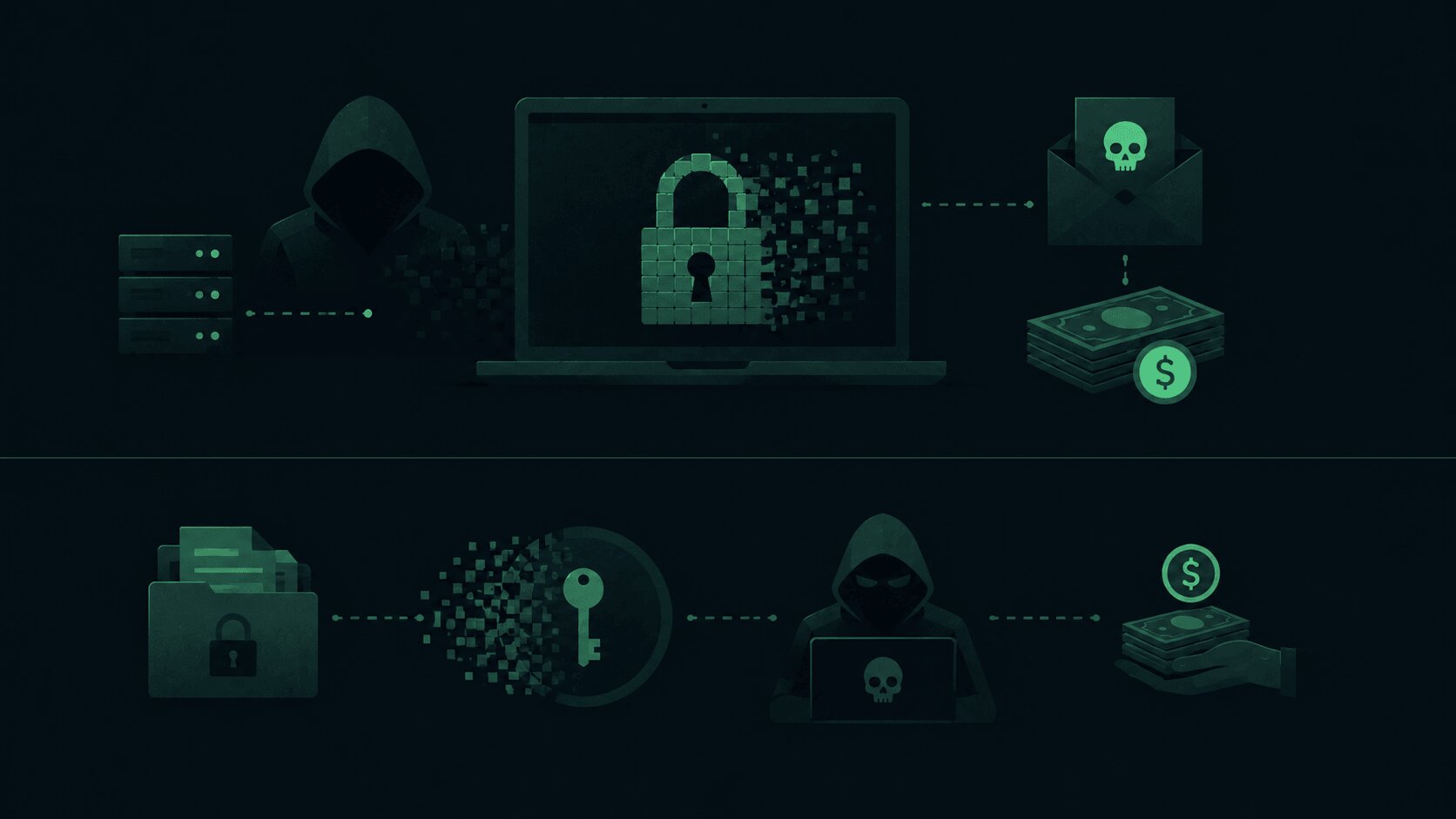
Ransomware Operators Hijack Active Directory via GPO to Lock Companies Without Encryption
Ransomware & Extortion
Alfa-Bank Balances Cloud Trust and Zero Trust Models During Migration to Yandex Cloud
Policy & Regulation
Asset and Vulnerability Management in Practice: Building a Working Process with MaxPatrol VM and NetBox
Vulnerabilities & ExploitsMicrosoft Releases Record 966 Patches in Largest Patch Tuesday Ever, Including Two Actively Exploited Zero-Days
Microsoft has issued its largest monthly security update to date, addressing 966 vulnerabilities across Windows and related products during the September Patch Tuesday. The release includes two zero-day flaws already exploited in real-world attacks: CVE-2026-81963 in the Windows Update stack and CVE-2026-85880 in the Windows ALPC mechanism, both enabling local privilege escalation to SYSTEM level. A total of 105 vulnerabilities received critical severity ratings, with the majority involving privilege escalation (438) and remote code execution (258). An additional 204 issues were fixed earlier in September across Azure, Entra ID, Edge, and other services. The surge in patched flaws coincides with Microsoft's deployment of an AI-assisted vulnerability discovery system. Previous months saw significantly lower volumes, with 570 fixes in July and 400 in August.
SCCM Misconfigurations Expose Organizations to Full Infrastructure Takeover
BI.ZONE expert Alexander Kuznetsov details how Microsoft Configuration Manager (SCCM) deployments in 25% of Russian organizations can grant attackers complete control over corporate infrastructure when misconfigured. The article outlines critical risks including administrative privilege escalation, lateral movement, data collection, persistence, and policy manipulation that allow attackers to blend with legitimate maintenance operations. Key recommendations focus on infrastructure isolation, placing Site Server, SMS Provider, and Site Database Server roles in Tier 0 segments, and avoiding single SCCM hierarchies across multiple Active Directory forests or security tiers. The report emphasizes eliminating Network Access Account (NAA) usage in favor of HTTPS or Enhanced HTTP, strictly limiting Client Push Account and domain join account privileges, and auditing computer accounts for site servers. Additional guidance covers PXE deployment risks, database access restrictions, and role-based administrative controls to prevent credential extraction via tools such as SharpSCCM and mimikatz. Overall, the publication provides actionable hardening steps aligned with the principle of least privilege to reduce the attack surface of widely deployed SCCM environments.
Critical Veeam ONE Flaw Allows Remote Attackers to Expose Service Account Credentials via Forced SMB Authentication
Veeam has patched a critical vulnerability in Veeam ONE that enables a remote unauthenticated attacker to force SMB authentication attempts using the platform's service account. Identified as CVE-2026-65641 with a CVSS score of 9.3, the flaw impacts version 13.1.0.7034 and all prior builds of the 13.x line, while 12.x installations remain unaffected. Exploitation allows an attacker to redirect SMB authentication to a controlled server, exposing Net-NTLM material that can be used for offline password cracking or NTLM relay attacks against other services. The severity depends on the privileges of the compromised account, with elevated risk in environments where Veeam ONE runs with high privileges or broad access to Active Directory, backup servers, and hypervisors. Patches are available in Veeam ONE 13.1 Patch 0 (build 13.1.0.7233) and Veeam ONE 13.0.2 Patch 1 (build 13.0.2.7159), and organizations are urged to apply updates immediately.
Rethinking SSO: Centralized User Data Provision and Authorization Processing in Corporate Systems
The article examines Single Sign-On systems not merely as authentication gateways but as architectural hubs for delivering user attributes and executing additional authorization logic. It highlights how SSO can aggregate data from sources like Active Directory, HR systems, and IDM platforms, then deliver it via OIDC claims to downstream applications. The discussion covers the shift from fragmented integrations across dozens of apps to a single trusted enforcement point using standards such as aggregated and distributed claims. It also explores the authorization pipeline where SSO acts as a Policy Enforcement Point querying external Policy Decision Points via the AuthZEN Authorization API 1.0. Practical examples include electronic business cards, role assignment, access routing, and mandatory MFA checks before token issuance. The piece stresses maintaining data ownership with source systems while establishing SSO as the single point of trust for applications.
The Tale of Active Directory Domain Sabotage: Architect Plants DNS-Killing Task on Departing Branch Controllers
A detailed case study from a former Windows Server 2003 Active Directory environment describes how an architect embedded a monitoring script on branch domain controllers to detect prolonged loss of VPN connectivity to headquarters. The script incremented a hidden registry counter each time the head office IP failed to respond and triggered a net stop dns command once the threshold was exceeded, effectively collapsing the AD domain for the departing branches. The architect later cleaned up traces by reassigning tasks and ownership to the SYSTEM account. A network engineer eventually noticed the repeated DNS service stops, restarted the service multiple times, and eventually contacted the architect. The story illustrates both the critical dependency of Active Directory on DNS and the inherent risk posed by highly privileged administrators who can weaponize that dependency. Two main conclusions are drawn: DNS failure immediately renders an AD domain unusable, and every domain administrator represents the primary threat to domain integrity.
Advanced Windows Auditing Configuration Guide for Effective Incident Response in SOC Environments
The article provides a detailed walkthrough on configuring advanced audit policies in Windows 10 and Windows 11 to generate meaningful security events for incident investigation. It explains the role of the LSASS service in logging activities to the Security event log and contrasts basic auditing with the more granular advanced auditing that offers 53 subcategories. The guide covers enabling key subcategories such as Logon, Process Creation, and Account Management using auditpol commands, along with registry tweaks for PowerShell Script Block Logging and command-line auditing in process creation events. Practical tests demonstrate real-world events including successful and failed logons (Event IDs 4624 and 4625), process creation with arguments (Event ID 4688), and user account creation (Event IDs 4720 and 4732). All steps are performed on a VMware Workstation virtual machine running Windows 10 Pro 22H2 to avoid impacting production systems.
Cybercriminals Actively Exploiting Critical Zero-Day Vulnerabilities in SonicWall SMA1000 Appliances
Cybercriminals are actively exploiting a critical zero-day vulnerability in SonicWall SMA1000 appliances used for corporate remote access. The attack chain combines two flaws that together enable unauthenticated access to internal services and local privilege escalation, ultimately allowing remote code execution with maximum privileges on affected devices. The most severe issue, CVE-2026-15409, carries a maximum CVSS score of 10.0 and permits attackers to reach internal appliance services without authentication, while CVE-2026-15410 facilitates local privilege escalation. Impacted models include the SMA1000 Series 6210, 7210, and 8200v running firmware versions 12.4.3-03434 and 12.5.0-02800. SonicWall has confirmed that its SSL VPN firewalls and the SMA 100 product line remain unaffected. Compromised appliances have already been observed serving as stealthy entry points into corporate networks, where attackers harvested credentials, session data, and multi-factor authentication seeds before pivoting into Active Directory environments. Administrators are urged to apply the emergency patches that upgrade devices to firmware versions 12.4.3-03453, 12.5.0-02835, or later.
Solar inRights 3.11 Automatically Blocks Corporate Accounts Whose Passwords Appear in Dark Web Leaks
GC Solar has released Solar inRights 3.11, a major update to its identity and access management platform that integrates directly with the Solar AURA threat monitoring service. The new version automatically detects corporate credentials exposed in open sources and dark web dumps, validates whether the same login-password pairs remain active inside the organization, and instantly revokes access while alerting the security team. The feature addresses the common scenario in which employees reuse work email addresses and passwords on third-party websites, allowing attackers to test stolen credentials against corporate systems in what appears to be legitimate login attempts. Research cited by Solar shows that a single large Russian company typically has more than 600 unique corporate accounts circulating in public and underground sources, although only about 4 percent directly indicate infrastructure compromise. Yandex Cloud data further reveals that valid account abuse featured in 54 percent of over 25,000 attacks on cloud and hybrid environments during the first half of 2025. In addition to the leak-response capability, version 3.11 introduces improved search, request filtering, and integration templates for Active Directory, Exchange, and 1C.
Microsoft Patches Record 570 Windows Vulnerabilities in July Update, Including Three Actively Exploited Zero-Days
Microsoft released its largest Patch Tuesday update to date, addressing 570 vulnerabilities across Windows and related products. Among them are three zero-day flaws, two of which have already been exploited in real-world attacks. Fifty-nine issues were rated critical, with 48 enabling remote code execution. The company credited its use of AI for discovering more vulnerabilities in the Windows codebase. The update covers a wide range of components including .NET, Active Directory services, Microsoft Office, Azure services, and Microsoft Defender. Administrators are urged to apply the patches promptly to mitigate risks from privilege escalation, remote code execution, and information disclosure flaws.